Material Testing 4 November 2026 5 min read
Steel Rebar Tensile and Bend Tests: Why Every Batch Deserves a Check
Reinforcement steel carries the tension in every concrete member. Tensile, bend and re-bend tests confirm the bars you paid for are the bars you got.
Concrete is strong in compression and weak in tension. Steel reinforcement does the rest. If the steel is under grade, the structure has less safety margin than the engineer designed for, and nobody can see it once the concrete is poured.
What we test
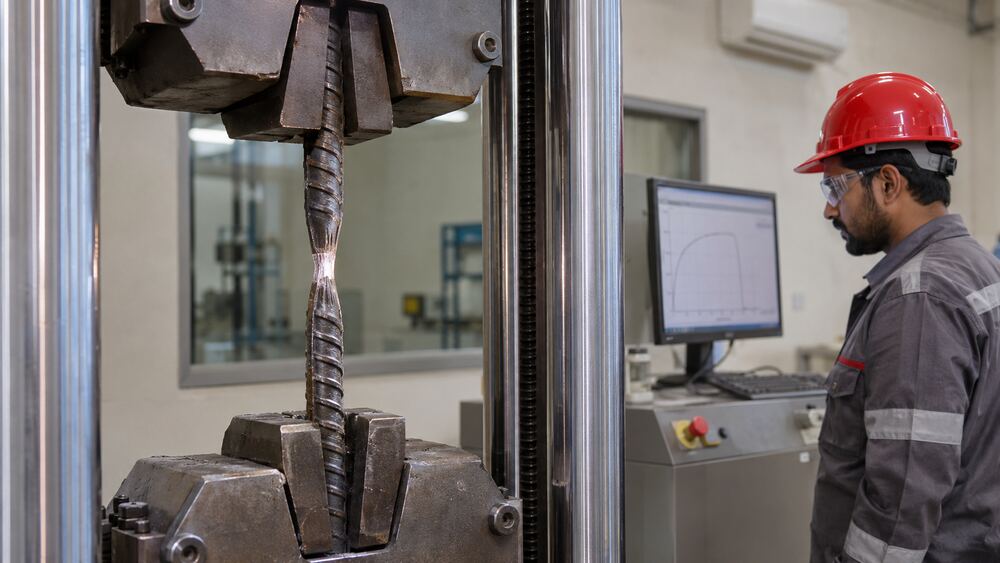
Tensile test
A bar sample is gripped in a universal testing machine and pulled until it breaks. The test records yield strength, ultimate tensile strength and elongation. Yield strength is the figure designers rely on, for example Grade 40 or Grade 60 steel.
Bend and re-bend tests
The bar is bent around a mandrel to a set angle and checked for cracks on the outside of the bend. In the re-bend test it is bent, aged and straightened back. These tests reveal brittle steel that may pass on strength but crack during bending on site.
Weight per metre
Underweight bars have a smaller effective area. A simple mass check against the nominal diameter is one of the fastest ways to catch them.
When to test
- On every new supplier or new batch arriving at site.
- Whenever bars look visibly different: rib pattern, colour or surface finish.
- Before critical pours such as transfer slabs or heavily loaded columns.
| Test | What it tells you |
|---|---|
| Tensile | Yield and ultimate strength, ductility |
| Bend / re-bend | Ductility and resistance to cracking when bent |
| Mass per metre | Whether the bar is under section |
Our lab turns most rebar tests around quickly with a signed report you can file with your consultant. Bring three samples per diameter, each about 1 metre long, and we will handle the rest.