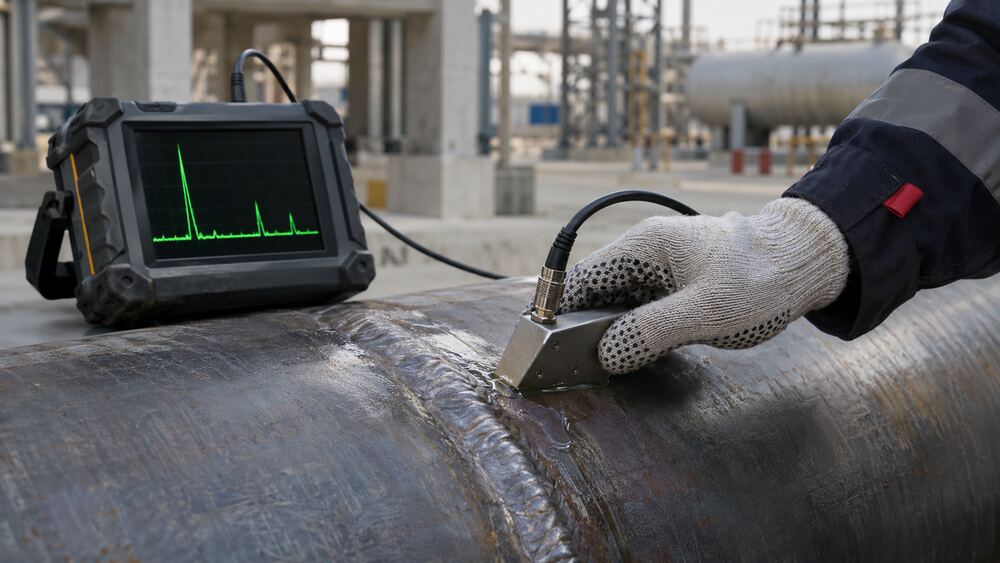
 UT
Ultrasonic Inspection
High frequency sound finds internal flaws in welds, plates and forgings, and measures remaining wall thickness of tanks and pipes.
Best for
Butt welds, thick sections, thickness gauging
Destructive testing in our lab, non-destructive testing and pressure vessel inspection on your site. Reliable results that help contractors, engineers and plant owners decide with confidence.
A | Destructive Testing (DT)
Destructive testing applies controlled force or stress to material samples to determine their mechanical properties, strength and performance limits. It is the most direct way to confirm that what arrived on site matches the specification.
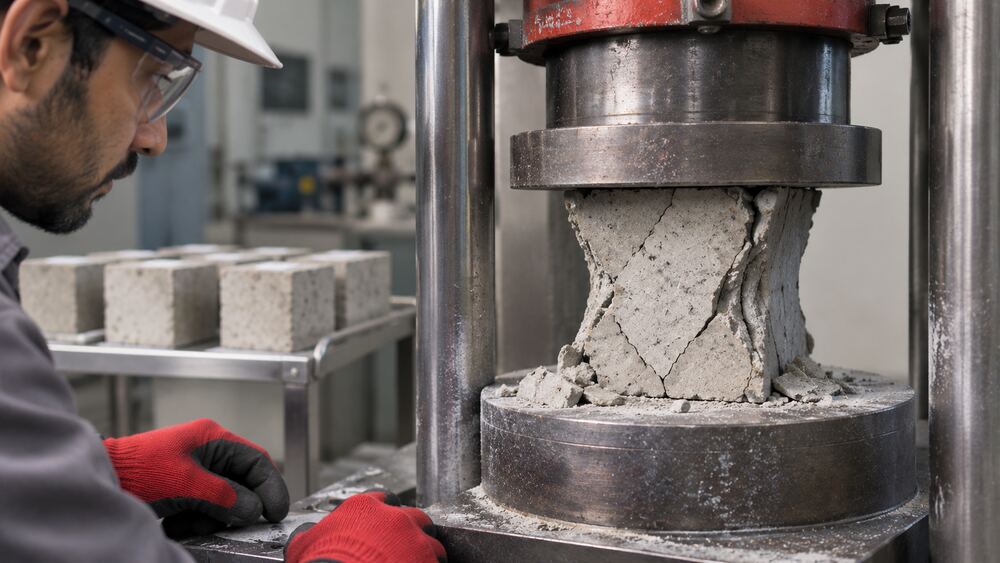
Cube and cylinder crushing at 7 and 28 days to confirm the specified grade.
Yield, ultimate strength and elongation of rebar and structural steel.
Ductility checks that catch brittle bars before they crack on site.
Setting time, consistency, fineness and strength of cement samples.
Grading, impact, crushing value, flakiness and cleanliness of coarse and fine aggregate.
Proctor and field density tests for fills, sub-grades and foundations.
Particle size distribution for sand, aggregate and soil.
Absorption of bricks, blocks, tiles and aggregate.
Ask us about any other construction material test your project requires.
B | Non-Destructive Testing (NDT)
Non-destructive testing examines materials, components and structures without affecting their function or integrity, helping identify defects and assess structural condition while the asset stays in service.
UTHigh frequency sound finds internal flaws in welds, plates and forgings, and measures remaining wall thickness of tanks and pipes.
Best for
Butt welds, thick sections, thickness gauging
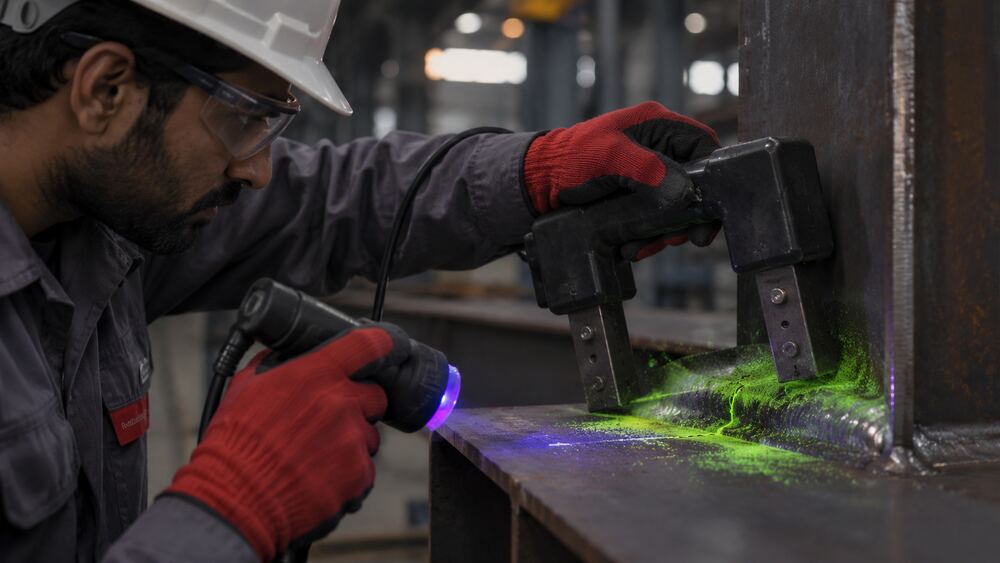
MPTA magnetic field and fine iron particles reveal surface and near surface cracks in carbon steel, even hairline indications.
Best for
Fillet welds, lugs, hooks, shafts, steel connections
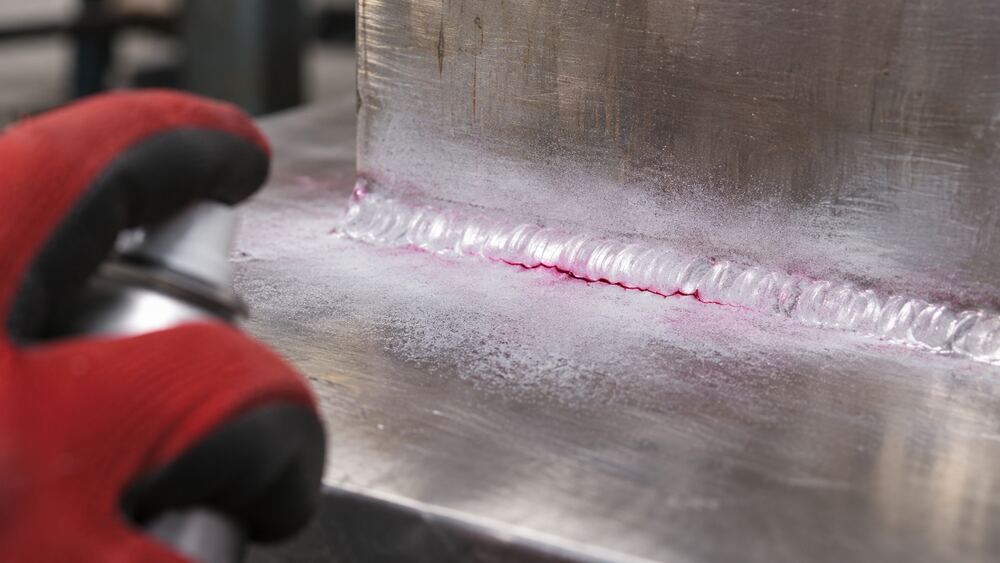 DPT
Coloured penetrant and developer show open surface defects as sharp red lines on any non-porous material.
Best for
Stainless steel, aluminium, machined and non-magnetic parts
Concrete and structures
Assess existing structures, check suspect concrete and locate reinforcement before coring or drilling.
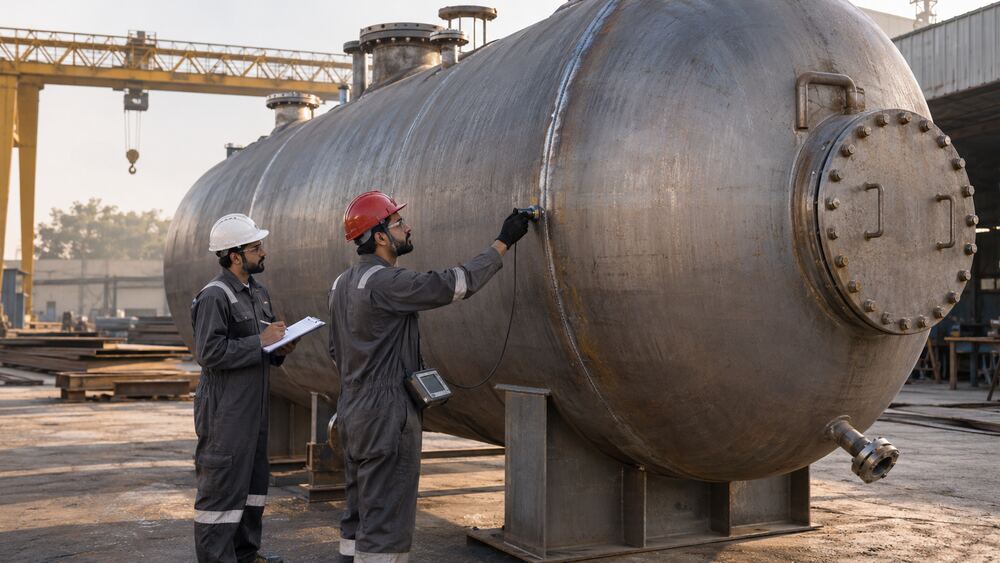
C | Pressure Vessel Inspection
Boilers, air receivers, storage tanks and process vessels hold enormous energy. Our inspections combine visual examination, thickness surveys and weld NDT to confirm they are safe to operate.
Who relies on our results
Contractors
Consulting engineers
Developers
Project owners
Industrial plants
Fabrication workshops
FAQ
Both. Concrete cubes, steel, cement, aggregate and soil samples are tested in our lab. NDT methods such as ultrasonic, magnetic particle, dye penetrant, rebound hammer and UPV, and pressure vessel inspections are carried out at your site or plant.
As a general guide, bring three samples per bar diameter, each about one metre long. We will confirm the exact requirement for your specification.
Magnetic particle testing suits surface cracks in carbon steel welds, dye penetrant suits stainless steel and non-magnetic parts, and ultrasonic testing checks the full thickness of a weld for internal defects. Many inspections combine methods.
We assess the concrete in place with rebound hammer and UPV, and coordinate core testing if needed, so your engineer can make an informed decision instead of guessing.
Yes. Our pressure vessel inspections cover boilers, air receivers, storage tanks and process vessels, with thickness surveys, weld inspection and a clear fit for service report.
Request a test
Send the details and we will confirm scope, sample requirements and timing. Your request opens in WhatsApp, ready to send to our lab team.